
Doomscrolling isn’t a discipline flaw; it’s an engineered trap designed to turn us into digital junkies. By shifting our daily time from consuming short-form video to physically creating (writing, sketching, taking offline walks), we can break out of constant brain fatigue.To quit, stop relying on willpower and use environmental friction: app limits as speed bumps, strict notification blackouts, physical books in waiting moments, and delayed scrolling windows.
The Invisible daily drain
We all face the same invisible daily drain: we spend hours trapped in the doomscroll loop, watching the clock slip away without knowing how to stop.
Before you get too hard on yourself, let me be clear: our brains are hardwired to follow the path of least resistance to conserve energy. Social media apps are designed by elite engineers to have absolute zero friction:
-
No passcode needed (FaceID instantly opens it).
-
No deciding what to watch (the algorithm auto-plays the next clip).
-
No stopping point (infinite scroll deletes natural breaks like page turns or end credits).
Because there is zero mental friction, our brains slide into doomscrolling automatically without having to think.
Now, I know what you’re thinking—scrolling isn’t entirely useless. The algorithm feeds us interesting facts, current events, industry tips, and creative inspiration. But do we really need to spend hours and hours a day glued to screens? Go check your phone’s screen-time tracker right now. You’ll likely be shocked.
The real trap isn’t just wasted time; it’s that we are consuming instead of creating. We’re trading our own art, ideas, and output for everyone else’s highlight reels. On top of that, the way we use our brains while scrolling started concerning me way more than just a lack of focus.
I decided to study more about this topic because I realized I was behaving in a way I never behaved before—and I hated it. It wasn’t my personality or my character. It was a system designed to turn us into junkies.
The Reality Check: What Endless Swiping Actually Does to You
So why is it so physically difficult to close the app?
1. We’ve Become Digital Gamblers
Social media feeds are built on variable reward schedules—the exact same mechanism that makes slot machines addictive. Every swipe is a pull of the handle. You never know if the next clip is going to be boring or give you a micro-hit of dopamine. It locks you into a continuous cycle of craving.
2. Prefrontal Cortex Overload
Constant exposure to rapid, emotionally charged information overloads your prefrontal cortex—the exact region responsible for decision-making, attention, and self-control. Have you found yourself unusually snappy in recent years? Is it hard for you to make a simple decision? Now you know why.
3. Context-Switching & Creative Drain
When you scroll through TikTok or Reels, your brain is forced to violently jump across 20 completely different emotional, intellectual, and visual contexts in a single minute:
-
Video 1: An angry political rant.
-
Video 2: A quick tech tutorial.
-
Video 3: A comedy clip.
Your brain isn’t just watching; it has to constantly ask: What is this? Do I care? Should I laugh, get mad, or swipe away?
That constant, rapid-fire gear-shifting drains your mental energy. Your brain operates with a finite pool of cognitive bandwidth each day. When you feel creatively blocked or unmotivated to write or film, it is not a lack of talent—it is a neurological hangover from scrolling.
Creation vs. Consumption: How Our Brains Actually Work
When you engage in deep reading, handwriting, sketching, or structuring creative projects, your brain works completely differently than when you scroll:
┌─────────────────────────────────────────────────────────────────────────┐
│                      ANALOG CREATION vs. SCROLLING                      │
├──────────────────────────────────────────┬──────────────────────────────┤
│ Deep Writing, Reading & Drawing          │ Algorithmic Scrolling        │
├──────────────────────────────────────────┼──────────────────────────────┤
│ Activates memory, spatial navigation,    │ Activates reactive reward    │
│ and long-term planning networks.         │ centers and emotional loops. │
│                                          │                              │
│ Result: High retention, deep focus,      │ Result: Decision fatigue,    │
│ and genuine creative flow state.         │ "wired but tired" brain.     │
└──────────────────────────────────────────┴──────────────────────────────┘
When you go for an offline walk in a forest or write on physical paper, your brain actively processes spatial data and tactile feedback. Physical movement forces the brain out of sedentary, repetitive thought loops.
On the flip side, if you train your brain for 10 years to switch contexts every 15 seconds, you actively erode your capacity for deep focus. Ten years from now, sitting down to read a dense book, write a strategy document, or frame a cinematic shot will feel physically painful. Your tolerance for boredom—where all real creativity lives—will be destroyed.
My 4-Step System to Break the Loop
You can’t fight multi-billion-dollar recommendation algorithms with raw willpower alone. You have to consciously engineer your environment.
Step 1: Put Speed Bumps in Place
-
App Limits: Set screen-time boundaries. Not to lock yourself out permanently, but to create a pattern interrupt. When the limit pops up, it acts as a speed bump to wake you up.
-
The 3-Second Pause: Before tapping Instagram or TikTok, force a 3-second pause and ask yourself: “Do I really need information right now, or am I just escaping a moment of boredom?” (And don’t hide behind excuses like “I can’t focus.” If you want to make a change, you have to put in the work!)
Step 2: The “Friction Swap”
When you’re waiting for food in the microwave, waiting for the bus, or waiting for ChatGPT to generate an answer, your instinct is to grab your phone. We try to fill every second of our lives with noise.
-
Replace those micro-moments with a physical task: water a plant, do 10 pushups, take out the trash, or organize a shelf.
-
Carry a physical book or a blank notebook with you. Read one page or sketch one idea instead of opening a feed.
Step 3: Go Off-Grid in Nature
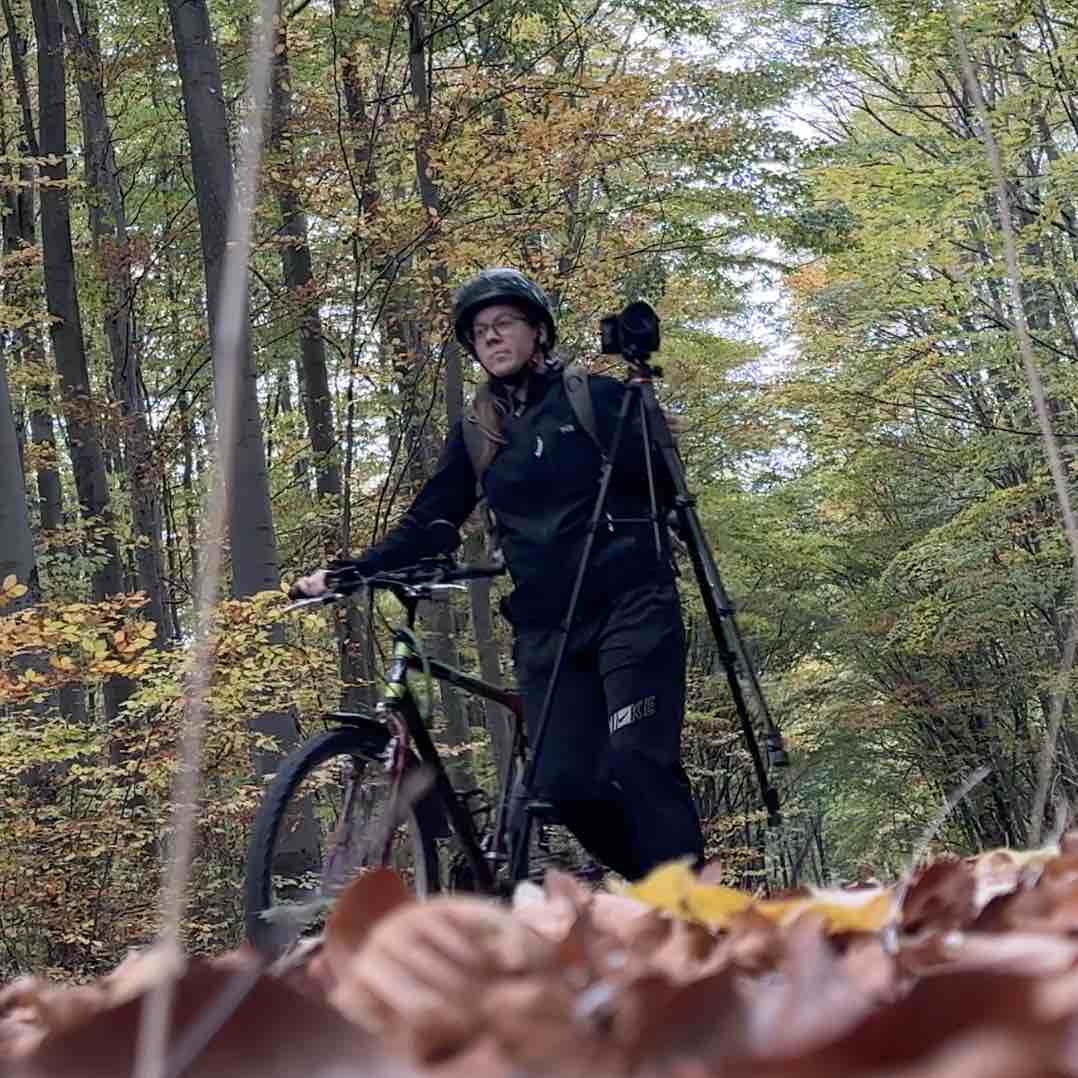
The ultimate cure for the scrolling brain isn’t willpower—it’s forced disconnection. Take walks in deep nature where your cell signal drops completely. When your phone becomes physically useless, your brain finally exhales. Silence stops feeling uncomfortable and starts feeling spacious.
Step 4: Real-World Guardrails (When You Use Your Phone for Work)
If you run a business or create content, you can’t just throw your phone in the ocean. Here is how I manage it practically:
-
The Evening Window: If I don’t watch a movie or TV in the evening, I allow myself to scroll for 1 hour at night. Knowing I have that window stops me from scrolling during the day. (And half the time, by evening I’m too tired to scroll anyway!)
-
The Utility Cutoff: Tell yourself: “I will scroll only until I stop getting valuable information that enhances my work or life.” With modern algorithms, you’ll hit useless fluff within 2 minutes.
-
Remember the Bots: Before you waste 20 minutes arguing in a comment section, remember that massive portions of comment sections are automated bot banks run by agencies. Almost nothing in those comment sections is real.
-
Turn Off Non-Essential Notifications: Nobody will die if you don’t reply instantly. People used to wait weeks for letters. Turn off notifications before 9 AM and after 5 PM.
Conclusion: Curated vs. Created
The main goal here is to become conscious again. How many times have you looked at your watch for the time, looked away, and immediately realized you didn’t even register what time it was?
Be present. Focus on what you are doing. You don’t have to hate the algorithm, but you have to master it. Use digital tools as a resource—don’t let them use you.
🎬 Ready to Turn Your Energy into High-Value Output?

Comments are closed