
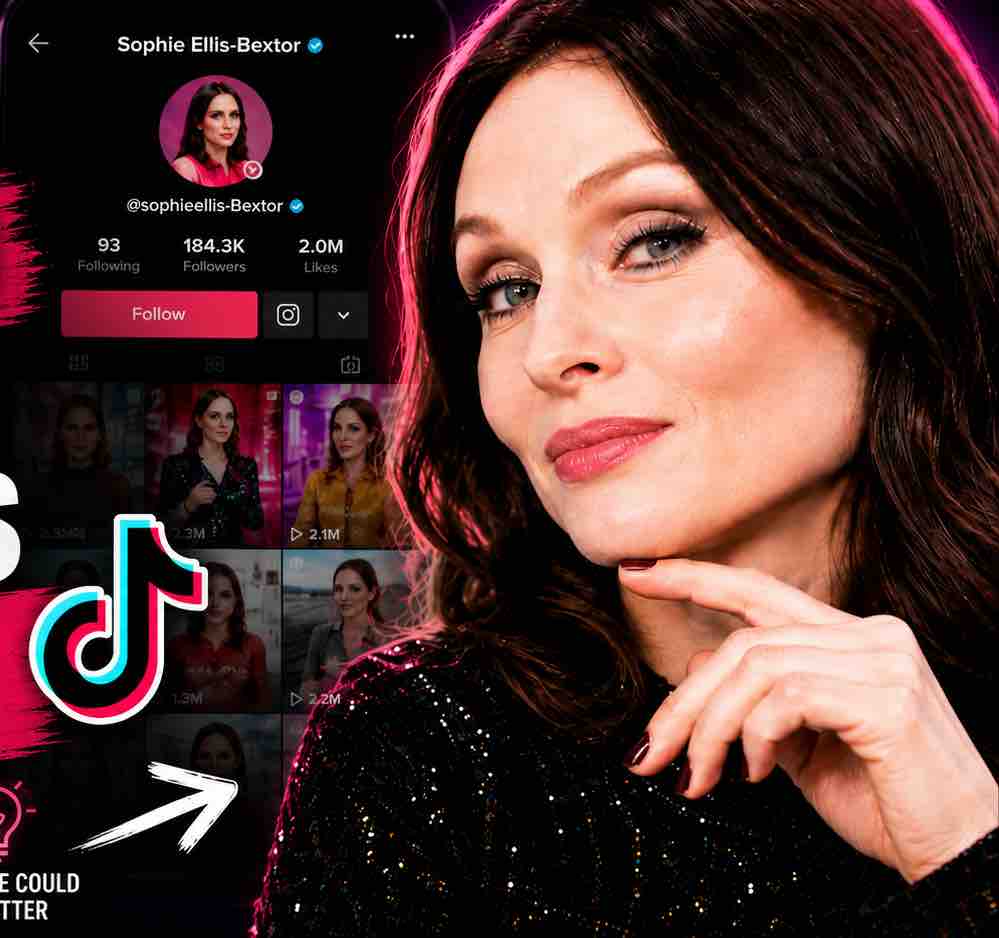
Learn how to audit your TikTok content like a videographer, using Sophie Ellis-Bextor’s TikTok as a real example of hooks, framing, lighting and content strategy.
Posting more videos is not always the answer. Very annoying, I know.
If your TikTok content is not performing the way you want, the problem might not be consistency. It might be the content itself. More specifically, the way your videos are filmed, framed, edited, structured or introduced in the first few seconds.
That is where a TikTok content audit helps.
Instead of guessing what the algorithm wants, you look at your videos properly and ask:
- what people see first
- where the hook is
- whether the video feels like TikTok
- does it feel like something made for Instagram and thrown on TikTok five minutes later
For this example, I looked at Sophie Ellis-Bextor’s TikTok content from a videographer and content strategy point of view. Not because her content is bad. Actually, that is what makes it interesting. Some of it works really well and some of it could be stronger. And that is exactly what happens with most creators, brands and artists online.
You do not usually need to burn the whole thing down and start again. You need to know what to keep, what to change and what to try next.
What is a TikTok content audit?
A TikTok content audit is a proper review of your videos. You look at your content and ask better questions than, “Why did this flop?” while emotionally staring at your phone.
Start by looking at the actual video, not just the views.
Pay attention to:
- first frame
- lighting
- background
- the way the person is framed
Can you recognise them quickly? Does the shot feel clean and intentional? Is there enough movement to keep people watching?
Then look at the hook and the caption. Is the point clear straight away, or is the caption doing all the work? Most importantly, would a stranger understand why they should keep watching?
That is the point of an audit. If you want me to audit your Tiktok account, book it here. It is not about insulting your content. It is not about saying everything is terrible. It is about finding the small and big things that are stopping the content from doing its job.
A good audit should show you what is already working, what is confusing people, and what you can improve in your next videos.
Why views are not enough
Views are useful, but they do not tell the full story. A video can have huge views because it was boosted, promoted or attached to a bigger campaign. That is normal, especially for artists, musicians, brands and anyone promoting a launch, a tour, an album or a product.
That does not mean the video is useless. It just means you need to be careful when you judge performance. If a video has millions of views but very few comments, that tells a different story from a video with strong views and genuine conversation underneath it.
A TikTok content audit should look at more than the number. It should look at the relationship between views, comments, shares, saves, watchability and the actual idea of the video.
Did people care, reacted or understood? Did the video give them a reason to stay? That is much more useful than just saying, “This got views, do more of this.” Because sometimes the video with fewer views is the one with the better idea.
The first frame matters more than you think
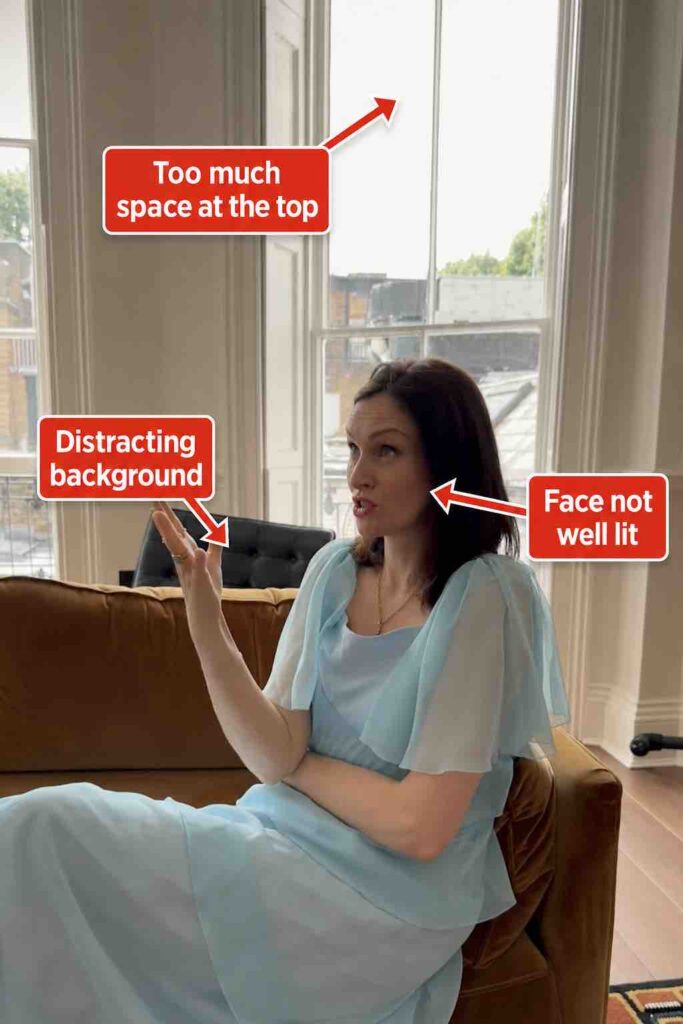
Before anyone listens to the full sentence, they see the image. That first frame is doing a lot of work. If the shot is messy, too wide, badly lit or visually confusing, people may scroll before the video even has a chance.
This is not about making every TikTok look expensive. TikTok does not need to look like a perfume advert from 2007. But the video still needs to be easy to watch.
When I looked at Sophie Ellis-Bextor’s TikTok, the strongest shots were often the ones where her face was clear, the light was flattering and the frame made sense straight away. That matters. If people recognise you, your face can be the hook. If people do not know you yet, the shot still needs to tell them that something worth watching is about to happen.
This applies to musicians, creators, businesses, coaches, videographers, podcasters and anyone trying to build a personal brand. Your first frame should not make people work too hard.
Should you care about lighting?
Lighting can change the whole feeling of a video. It is one of those things people pretend does not matter on TikTok. It does.
Bad lighting can make a good idea feel less professional. Harsh top light can create shadows under the eyes. A weird angle can make the person look less confident. A distracting background can pull attention away from the actual point of the video.
Good lighting does not need to be complicated.
In many cases, natural light is enough. Face a window, move away from a messy corner, adjust the camera height and bring the subject a little closer. Small changes like that can instantly make the video look cleaner and more intentional.
A lot of content does not need a full production setup. It needs better decisions. That is why a TikTok content audit should look at the filming, not just the idea. The idea might be good, but the shot might be weakening it.
TikTok is not Instagram
This is a big one. Some content looks nice, but it does not feel right for TikTok. A beautiful photo post, a clean album announcement or a polished product shot might work perfectly well on Instagram. On TikTok, it can feel too static or too promotional.
TikTok usually needs more movement, personality, story or immediacy. It does not always have to be chaotic. I am not saying you need to sprint down the street screaming into your front camera. But the video should feel like it belongs on the platform.
For Sophie Ellis-Bextor, some of the strongest TikTok ideas are the ones that feel real, funny or connected to a moment. Walking around London. Showing something behind the scenes. Reacting to something. Giving fans a small piece of access.
That type of content feels more natural on TikTok than a polished promo post. Not because promo is bad. Because TikTok works better when the promotion is wrapped inside a moment people actually want to watch.
The caption should not carry the whole video
Captions matter, but they should not do all the work. If the main point of the video is only written under the video, a lot of people will miss it. People scroll quickly. They do not always read the description first. If they are not already invested, they may leave before they understand what the video is about. Important information should also appear inside the video.
If you are announcing a show, put that on screen: “Sophie Ellis-Bextor is coming to New Zealand!”
If you are offering something, make it visible: “Get a Christmas card from Sophie Ellis-Bextor!”
If there is a key reason to watch, show it clearly. That does not mean covering the whole video in giant text like a ransom note. It just means the viewer should understand the point without needing to investigate the caption like Sherlock Holmes with WiFi.
Story beats random trends
Trends can work. But a trend is not automatically a strategy. If a sound or format fits your personality, your brand or your message, great. Use it. If it makes the content feel generic, it might actually weaken the video.
This is especially true when the person already has an interesting story. Sophie Ellis-Bextor has music, performance, nostalgia, fashion, touring, family, fans, London, career moments and the whole Murder on the Dance Floor comeback story.
That is a lot of content material. So the question is not, “What trend can she use?” The better question is, “What story can she tell?” The same applies to smaller creators and businesses. Your story is usually more interesting than a random trending sound.
People want context. They want personality. They want the thing behind the thing. That could be a behind the scenes moment, a funny problem, part of the process, a mistake, a reaction, or even a tiny detail people would normally never get to see. That is often where the best content lives.
Good content does not have to be perfect
A TikTok content audit is not about making every video flawless. Perfect content can be boring. The goal is not to remove personality. The goal is to remove confusion. You still want the video to feel alive. You still want it to feel human; to feel like TikTok, not a corporate training video trapped in portrait mode.
- human does not mean badly filmed
- authentic does not mean messy for no reason
- raw does not mean nobody can hear you
- the best content usually sits somewhere in the middle
- it feels natural, but there is still thought behind it
What to look for when auditing your own TikTok
Start with the first three seconds. That’s your first impression. Would this video make you stop scrolling? Can people understand what it is about straight away? Is there a clear reason to keep watching?
Then look at the visual side. Check whether the subject is easy to see, the frame feels clean, the lighting helps the shot, and the background is not pulling attention away from the video. If there is text on screen, it should make the message clearer, not just fill space.
After that, look at the idea itself. Does it feel like TikTok, or does it feel like content made for another platform? Would the video still make sense without relying too much on the caption?
Once you have looked at individual videos, look for patterns. Which ones got comments or saves? Which ones felt more natural? Which had stronger hooks, better visuals, or a real moment people could connect with? Which ones felt too slow or too much like Instagram?
That is usually where the answers are. Not in one random flop. Not in one lucky video. In the pattern.
What creators can learn from Sophie Ellis-Bextor’s TikTok
The biggest lesson from Sophie Ellis-Bextor’s TikTok is that strong content usually comes from a mix of personality, story and good execution.
A recognisable face, colourful visuals, a clear hook and good light can make a huge difference. Real moments, strong stories and useful text on screen also help people understand why they should keep watching. In many cases, behind the scenes content can feel more interesting than polished promotion because it gives people access to something they would not normally see.
But even when someone has a huge audience, the basics still matter.
Framing, lighting, the first frame and platform fit can still affect how the content performs. The difference between Instagram content and TikTok content also matters because each platform has its own style and expectations.
That should actually be encouraging. Because it means TikTok is not only about being famous. It is about making better content decisions.
Why an outside review can help
It is hard to review your own content clearly. You know what you meant, why you filmed it, what you were trying to say and the context behind it. A stranger does not. And TikTok is full of strangers.
That is why outside feedback can be useful. Not because you need someone to destroy your confidence for fun. There are cheaper ways to suffer. A good review gives you perspective. It shows you what is clear, what is confusing, what looks strong, what weakens the video and what you could try next. It can also give you ideas for future videos, better locations, stronger hooks, simple equipment upgrades and small filming changes that make your content look more intentional.
That is usually more useful than posting more videos with the same mistakes.
Final thoughts
A TikTok content audit is not about making your content perfect. It is about making it clearer, stronger and easier to watch.
Pay attention to the first frame, lighting, background and hook. Then check whether the text on screen supports the message, whether the story is clear, and whether the video actually feels like it belongs on TikTok.
And most importantly, look at the pattern. Your content usually tells you what needs to change. You just have to know what to look for.


Comments are closed