
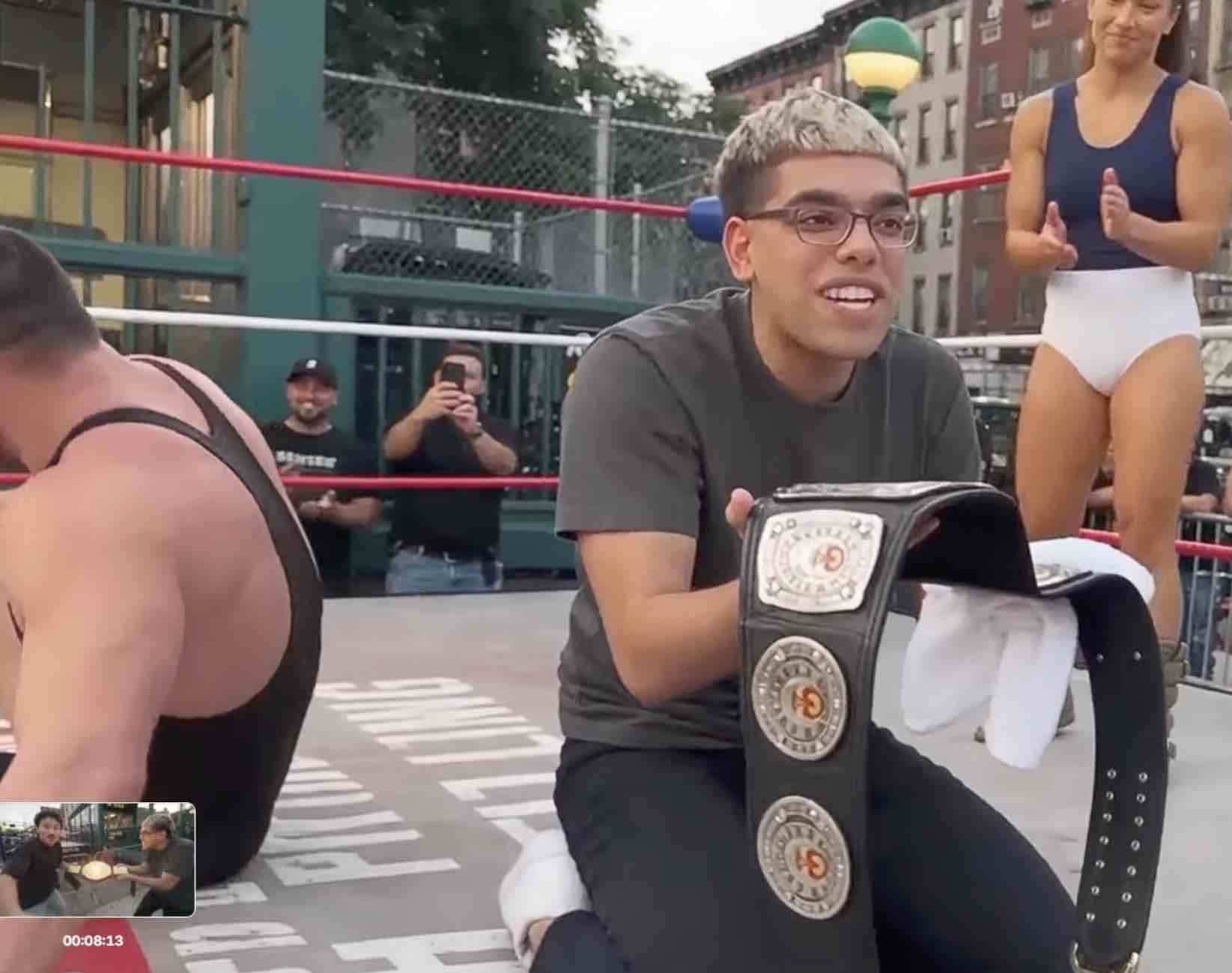
What is N3on’s AI stream? In September 2026, Kick streamer N3on experimented with an AI-generated version of himself to keep his channel active while he slept. Promoted as an always-on AI streamer powered by GPT-6 Astra and Higgsfield, it immediately sparked a heavy debate: Does livestreaming still need an actual human behind the camera?
Ridiculous as the experiment looked at first, it raises a much bigger question about the creator economy: What happens when creators no longer need to be present to create content?
What Actually Happened with N3on’s AI Stream?
On September 7, N3on announced what he called his “last stream as a human being,” claiming his AI stream would never end. (do not believe everything you hear and especially when it’s coming from a streamer who is trying to hype his content!).
The concept was straightforward: instead of streaming for hours every day, a synthetic version of him could produce entertainment while he slept, traveled, or stepped away. The AI version visually resembled N3on and placed him into generated situations. It was associated with Higgsfield and GPT-6 Astra, though the exact level of autonomy was debated. It relied on generated sequences rather than a completely independent AI personality driving every second in real time.
That distinction matters. There is a massive difference between a pre-rendered AI video playing on a loop and an autonomous digital N3on that actively understands chat, decides what to do next, and generates everything live.
Either way, the paradigm is here: a creator can leave the room while a synthetic copy continues entertaining the audience.
Why the Internet Hated It
The internet’s reaction was entirely predictable. Viewers accused N3on of selling out, asking why anyone would watch a livestream if the person wasn’t actually there.
On Reddit, the running joke was simply “bots watching bots.” Streamer xQc summed it up best with a viral reaction: “From botting to becoming the bot.” Another Kick streamer Sneako said N3on is destroying live streaming and all the people watching it have no souls.
N3on, however, defended the experiment. When called a sellout, he argued it gave fans something to watch offline, calling the concept innovative. Things got a bit confusing when he also stated, “First off, it’s not AI”—a strange defense given how the stream was marketed. But semantics aside, N3on didn’t see the experiment as replacing himself; he saw it as extending himself.
If you try to imagine how it looked like, it was basically a very well animated video game. People looked legit real but it was like that guide in Jumanji film. You needed couple of seconds to go “cringe”.
Build the Brand Before You Build the Robot
N3on claimed to be the world’s first AI streamer, but he wasn’t. Neuro-sama has been streaming as an AI VTuber since December 2022 using AI conversation, text-to-speech, and a virtual avatar on Twitch.
However, Neuro-sama was built as an AI character from day one. N3on was already a human creator with a recognizable personality, audience, and brand. The valuable asset wasn’t the AI tech itself—it was N3on. The AI simply borrowed everything he had already built.
This serves as a major warning for the creator economy. Influencers are actively experimenting with digital twins for brand deals and meetings. But as Digiday noted in 2026, a critical question remains: Who cares about your AI clone if nobody cared about you in the first place?
Creators often obsess over automation before building an audience worth automating. AI can multiply your presence, but it cannot manufacture your core identity.
Can Purely Synthetic AI Creators Work?
Of course, there is a counterargument. Look at TikTok, where completely synthetic AI creators—featuring perfect faces, lighting, and voices—are pulling in massive audiences.
Research backs up why this works:
-
A 2025 study found that when virtual influencers are perceived as high in physical attractiveness, audience response nearly matches that of human creators, reducing psychological distance and boosting purchase intent.
-
Research published in 2026 examining virtual streamers highlights that traits like interactivity, social presence, and attractiveness heavily drive viewer support and can even foster genuine parasocial closeness.
So yes, completely synthetic creators can work without a human celebrity behind them. Give them an attractive look, a compelling personality, and interactivity, and audiences will form connections with them.
I cover practical AI tools, SEO, video strategy and marketing trends inside my YouTube membership if you want more of this without the AI apocalypse drama.
The Big Question: Simulation vs. Real Experience
Right now, novelty is doing a lot of heavy lifting. An AI streamer is strange, so people click. But what happens when TikTok LIVE is flooded with 100,000 non-existent personalities who never sleep, speak 30 languages, and remember thousands of fans?
From a business standpoint, it is a goldmine. From an entertainment perspective, the answer is murkier. A massive 2026 meta-analysis covering 210 experiments revealed that while virtual influencers match humans in raw engagement, they generally perform worse when it comes to credibility, authentic attitudes, and deep behavioral intentions.
People don’t just follow aesthetics. They follow a human story, a someone:
-
failing and recovering
-
having a terrible day
-
disappearing for three weeks and returning with a narrative
-
changing their opinion or growing older
An AI character can simulate all of those milestones, but simulation and lived experience are not the same thing (for now).
The Darker Side: Identity and Trust
Generative AI also revives uncomfortable questions about online identity. Long before AI video, internet hoaxes claimed celebrities like Avril Lavigne, Selena Gomez or Britney Spears were replaced by lookalikes. Generative tools supercharge that paranoia.
While a creator cannot fake real-life family records, physical contracts, and legal history, the underlying identity problem is very real. It is becoming harder for viewers to know if a screen presence is live, prerecorded, AI-generated, or a hybrid. Furthermore, unauthorized AI recreations of deceased people are raising massive ethical and consent concerns.
Transparency is non-negotiable. If you are watching an AI clone or interacting with an AI customer service agent, the audience deserves to know. AI isn’t the enemy; pretending a machine is a human when trust is on the line is where the system collapses.
The Future: Humans as Originals, AI as Distribution
Is AI streaming the future? Probably as part of a hybrid ecosystem.
Human creators won’t vanish. Instead, successful creators will operate like media companies:
-
The Human remains the original source—living life, building authentic bonds, and creating core content.
-
The AI acts as distribution—answering basic questions, translating content, and keeping channels active during off-hours.
The real competition moving forward won’t be Humans vs. AI. It will be creators with a strong personal identity using AI versus endless generic AI bots that nobody remembers five minutes later.
Technology can copy your face, voice, and mannerisms. But the only reason anyone watches the copy is because somebody built the original first.
Comments are closed